BS says: "No demonstrated need for Fire Station #3"
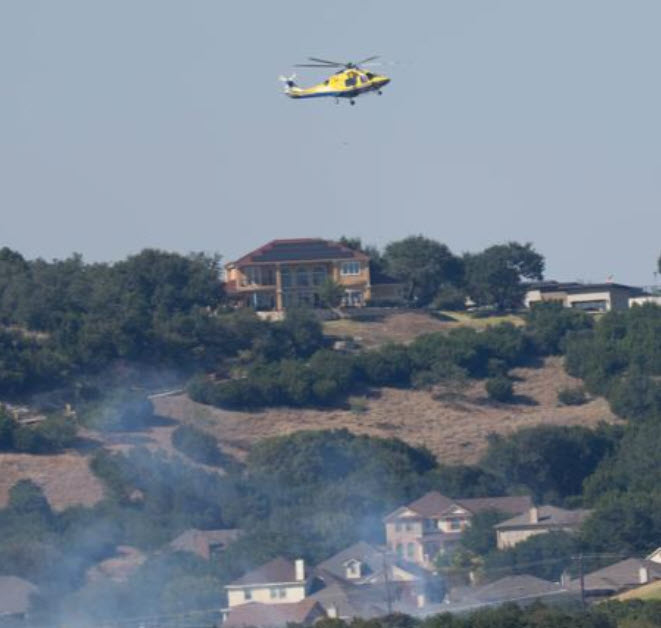
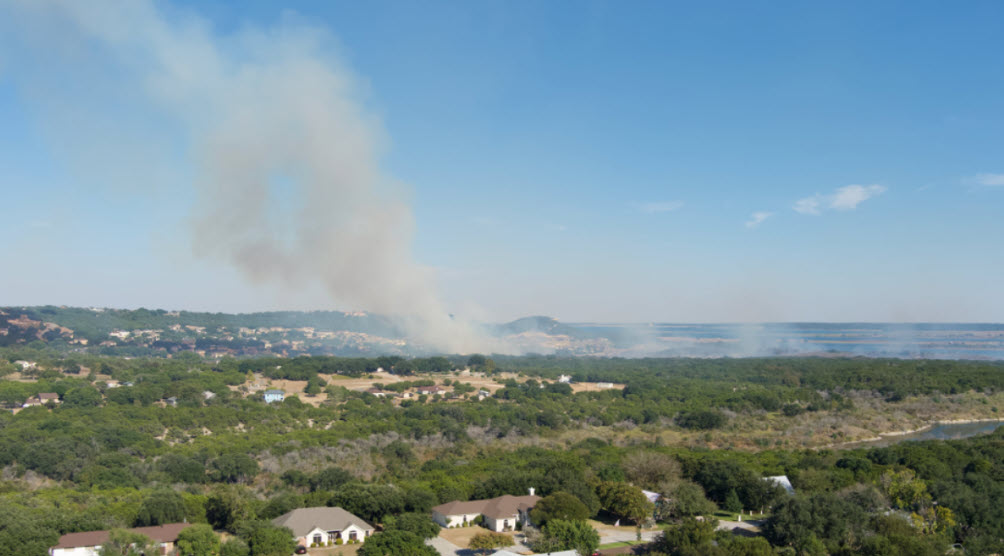
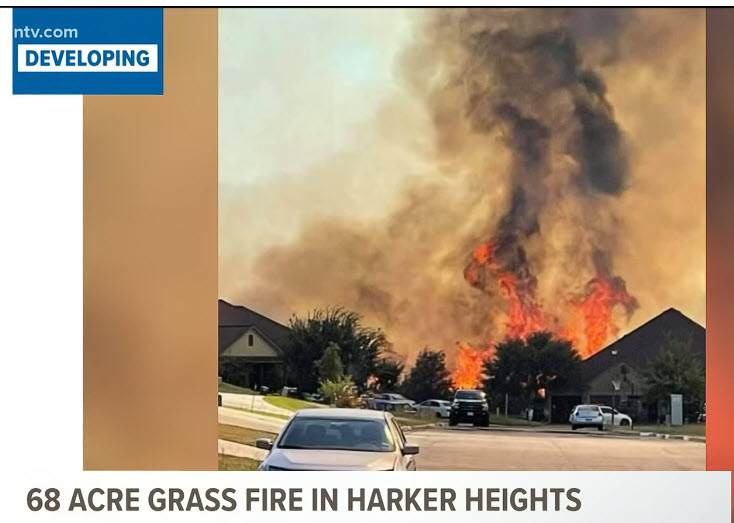
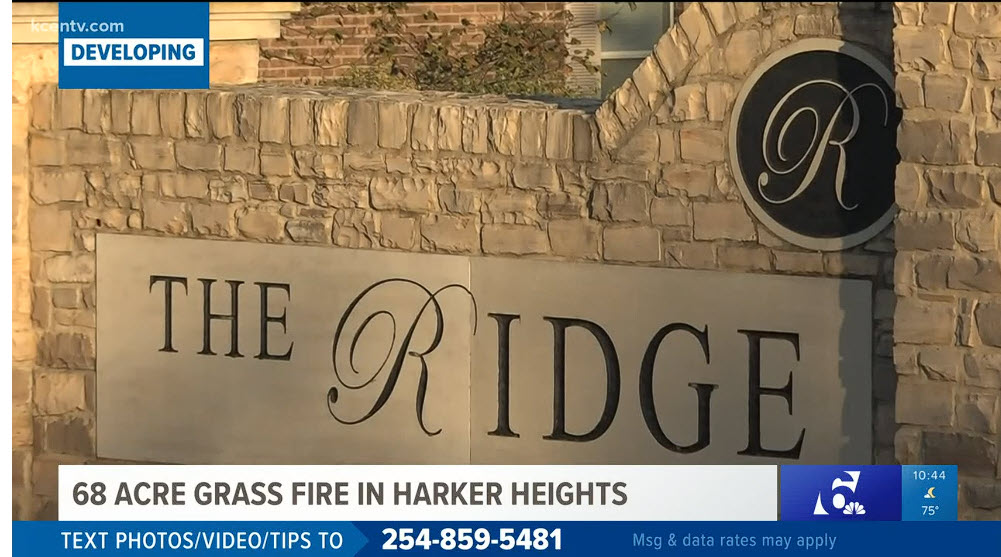
Sept 2021 Fire - Dana Peak Park: https://www.kcentv.com/article/news/local/bell-county/massive-fire-in-harker-heights-community-still-developing/500-c80eb951-7631-48ed-b891-2f8a0fad33b3
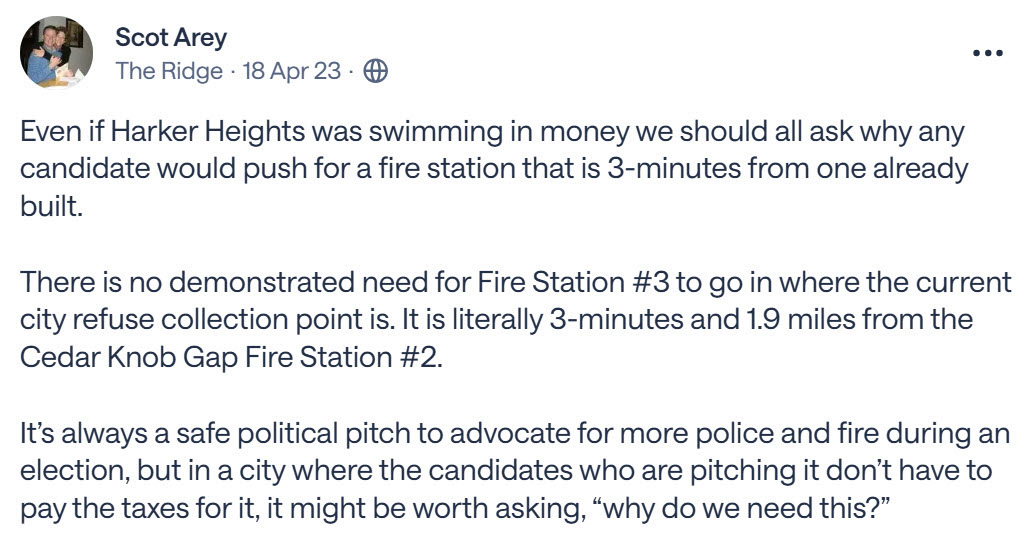
Baloney Scottie: Really?
What is the requirement/standard?
The standard benchmark for fire department response time is set by NFPA 1710 (for career/paid departments):
Call processing (dispatch): 64 seconds or less
Turnout time (crew ready to leave station): 80 seconds or less
Travel time to scene: 4 minutes or less (first arriving engine)
Total response time:
6 minutes 20 seconds or less, 90% of the time
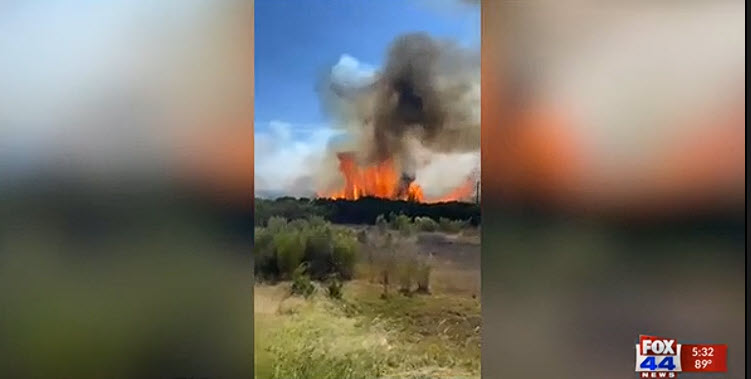
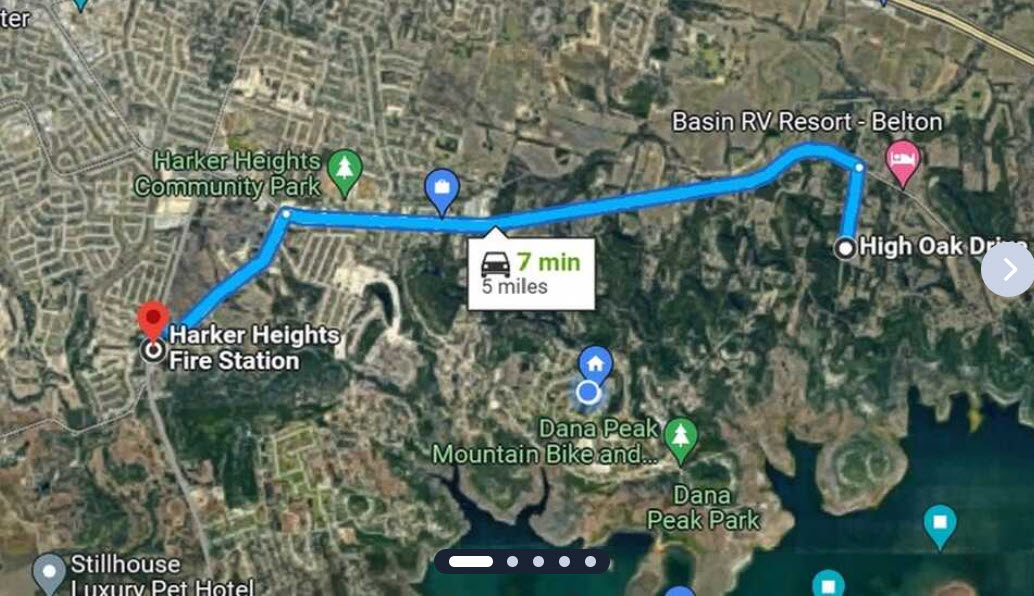
Harker Heights Fire Department Response Times: A Growing Concern
According to the City's own website, current fire response times are:
Main portions of the city: 5 to 6 minutes
Remote/eastern areas: approximately 10 minutes, due to rural terrain, hilly topography, and vehicle limitations
These numbers are already problematic — and they are about to get worse.
A Worsening Trend
The rapid growth of Evergreen Estates and the addition of 110+ high-end homes east of High Oak Drive/FM 2410 will place greater demand on a fire service infrastructure that is already stretched thin in the eastern corridor. Ongoing and planned commercial development in that same area compounds the problem further. The eastern areas of Harker Heights are already exceeding acceptable response time thresholds. Growth will only widen that gap.
What Happens When Average Response Times Exceed 6 Minutes?
ISO Rating Impact
The Insurance Services Office (ISO) grades fire departments on a scale of 1 to 10. Response time is a significant factor in that score. A declining ISO rating translates directly into higher homeowner insurance premiums for every resident in the city — regardless of where they live.
NFPA 1710 Non-Compliance
As a fully paid department, Harker Heights is held to the NFPA 1710 standard, which establishes a 6-minute 20-second benchmark for first-unit arrival. Exceeding that benchmark means falling out of compliance. While NFPA standards are not legally binding, they carry significant weight in:
Litigation — negligence claims against the city
Accreditation reviews
City council and budget justification processes
Life Safety Consequences
The 6-minute threshold is not arbitrary — it is grounded in survival science:
Brain damage begins within 4 to 6 minutes without oxygen
A room fire can reach flashover — fully involved — in as little as 5 to 10 minutes
Each minute beyond 6 minutes measurably reduces survival odds in cardiac arrest and structural fire events
Slower response times are not an inconvenience. They cost lives.